Halftone
Screen effectsSplit the canvas into a fine grid and measure each pixel's distance from its cell centre. Compare it with a radius taken from the image's brightness at that spot, and dark areas get big dots, light areas small ones. Here the image is a sine that sweeps across.
New to shaders? Read Rive Shaders Explained →
Halftone on its own artboard in the library file, with the ShaderQuad node and the WGSL, Inputs for Dot, Speed. Copy the artboard into any Rive file.
Noise, as a Rive file, on us
The Noise shader with the GPU Canvas node wired and the WGSL inside. Drop it into any Rive file and see how a shader lives there.
Every shader here, as a ready-to-drop Rive file
Play with all of them here. The library file, every shader on its own artboard, comes with the Scripting Course, next to the lessons and the Space Game it belongs to.
Other free Rive tools
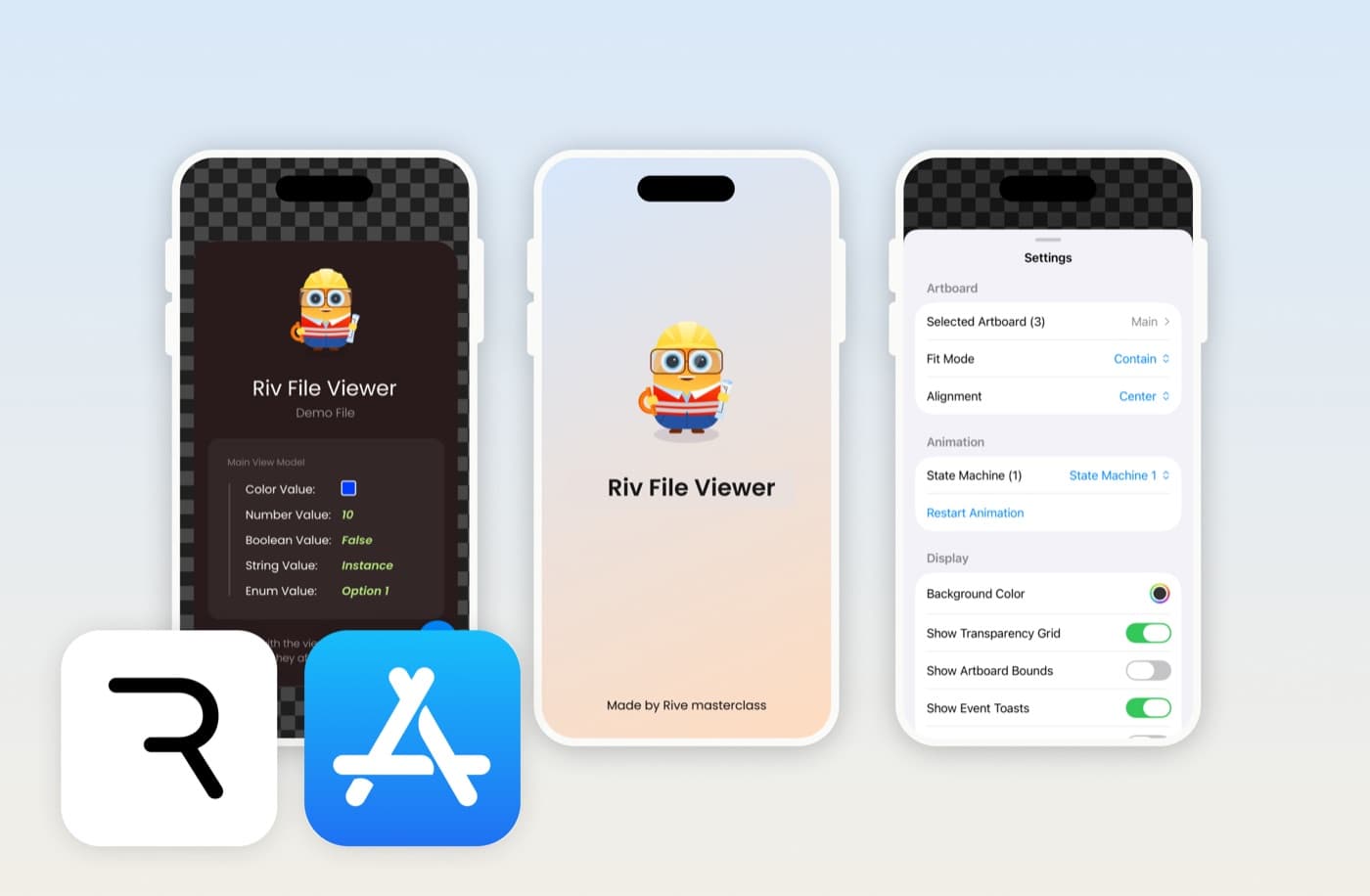
Riv File Viewer
Open, preview and debug .riv files on iPhone and iPad. Control state machines, edit data binding, and inspect assets.
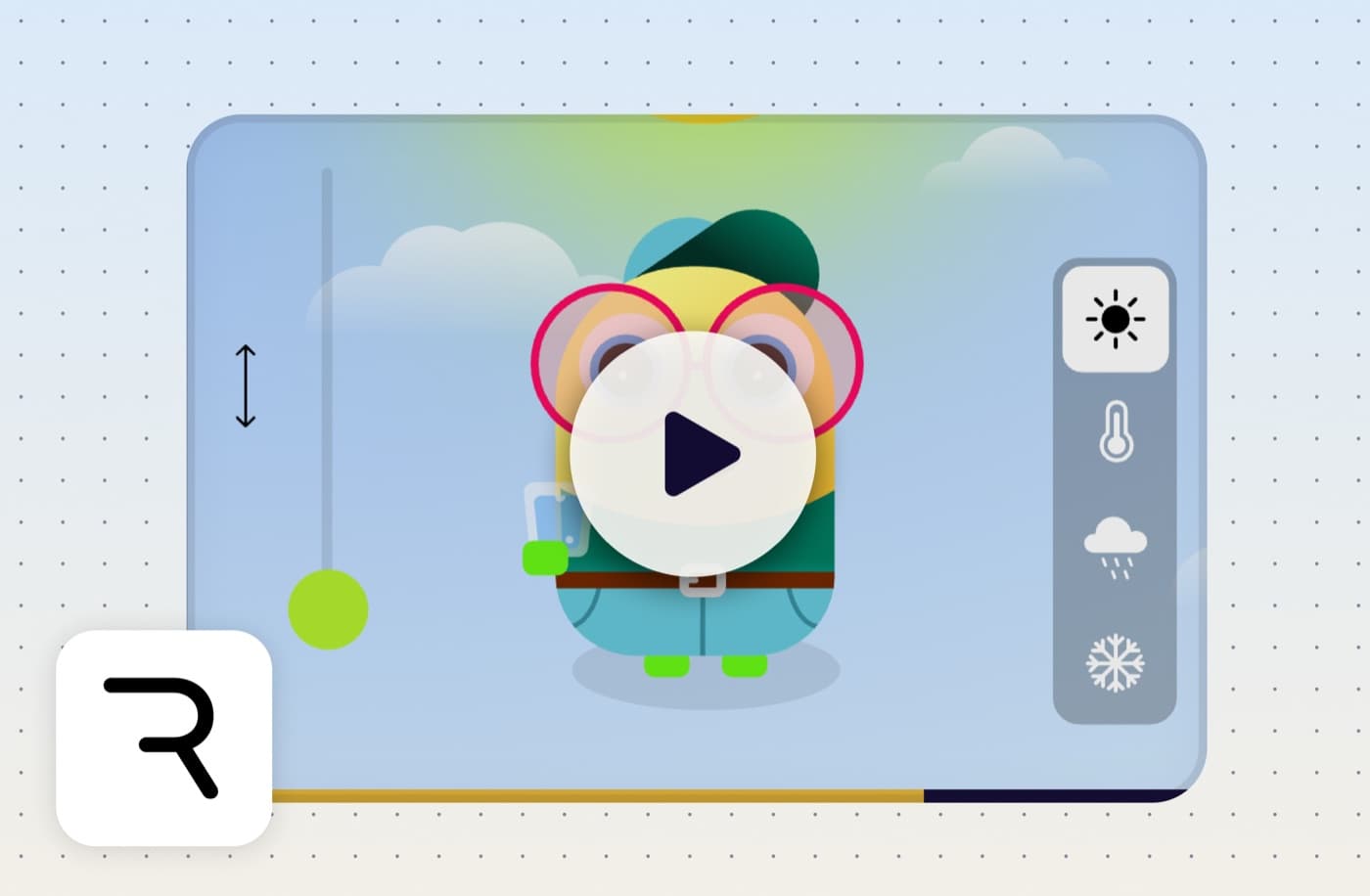
Rive to Video Converter
Record a Rive animation playing and save it as a shareable mp4. Runs in your browser, nothing gets uploaded.
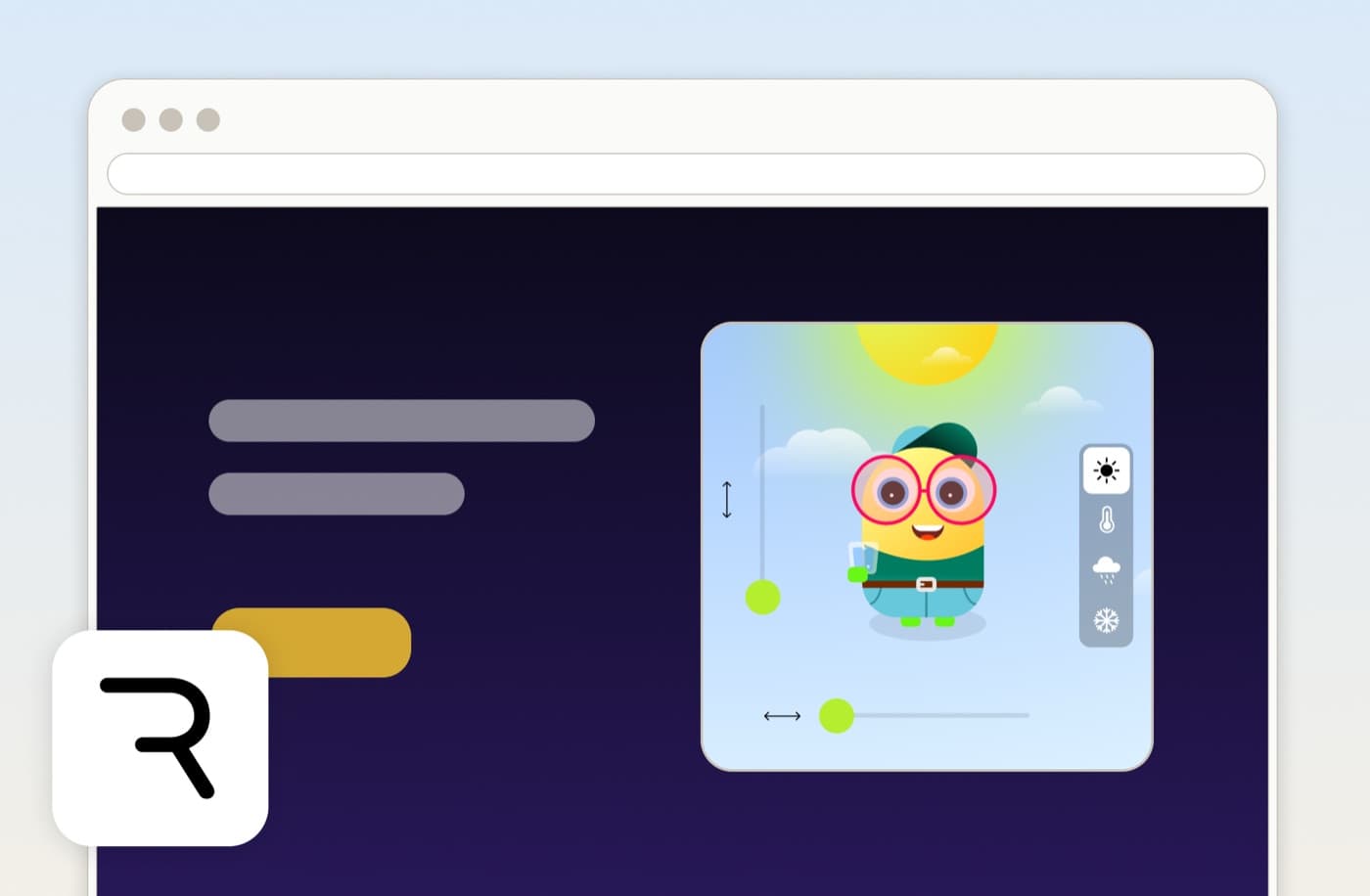
Embed Rive on Your Website
Paste a public .riv URL and copy an iframe embed code. Add a live Rive animation to any site, no SDK needed.